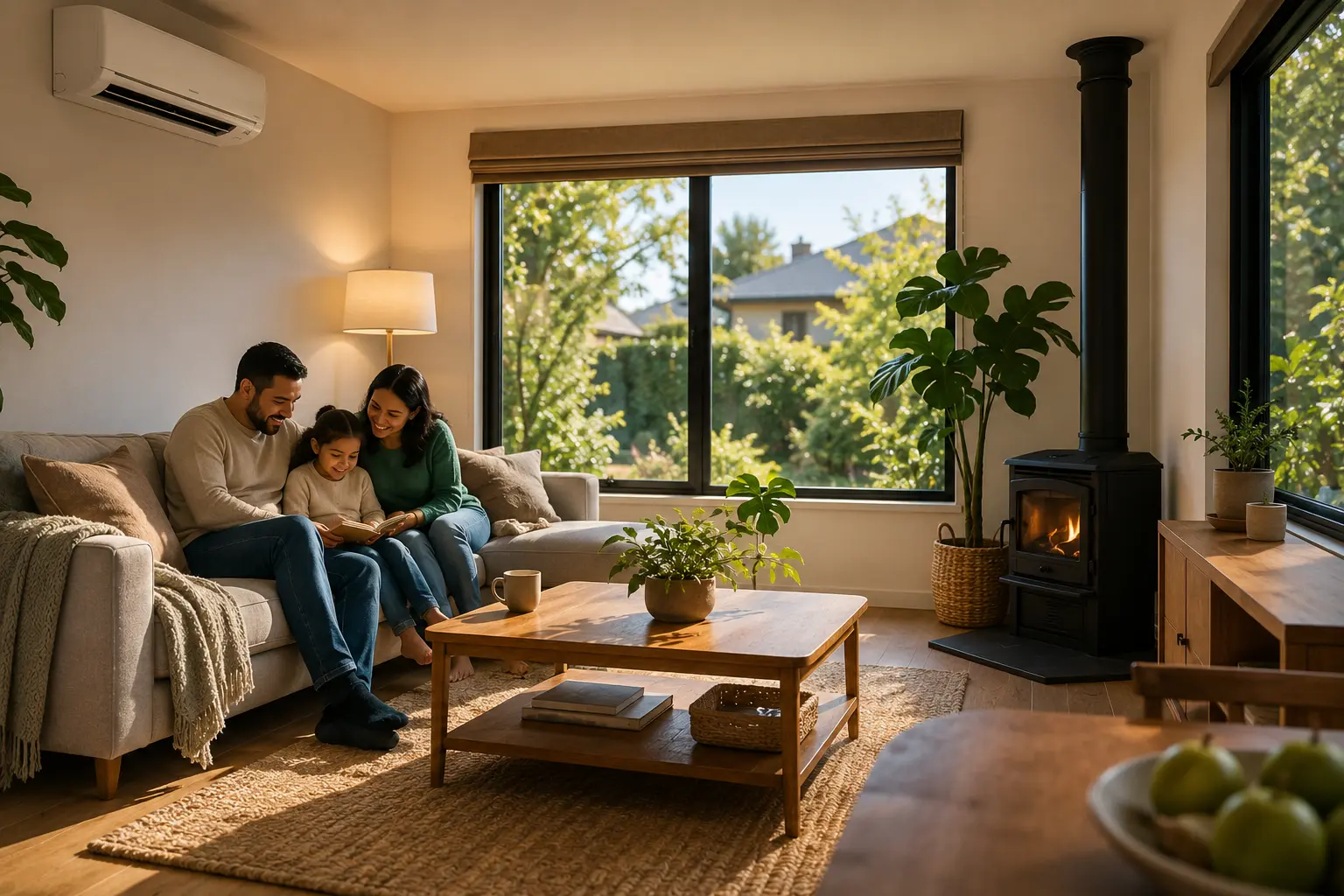
If you're a landlord in New Zealand, healthy homes compliance is no longer something you can put off. As of 1 July 2025, every private rental property in the country must meet the Healthy Homes Standards — no exceptions, no grace periods for existing tenancies.
For landlords in Dunedin and Otago, where older housing stock is common and damp winters are a fact of life, getting on top of these requirements matters more than most. Here's what you need to know.
The Healthy Homes Standards area set of minimum requirements introduced under the Residential Tenancies Act to ensure rental properties are warm, dry, and safe for tenants. They cover five specific areas:
• Heating
• Insulation
• Ventilation
• Moisture and drainage
• Draught stopping
These aren't just guidelines. They're legally enforceable minimum standards. Landlords who don't comply risk significant fines and Tenancy Tribunal proceedings.

Your rental must have a fixed heater in the main living room capable of heating the space to a minimum of 18°C. The required capacity depends on the size of the room and your location's climate zone.
Heat pumps are the most common and cost-effective solution, but flued gas heaters, wood burners, pellet burners, and adequately-sized electric heaters can also qualify. Portable heaters and unflued gas heaters cannot be used as the sole heating source.
For Dunedin landlords: Dunedin sits in a colder climate zone, which means heat pump capacity requirements are calculated based on an external temperature of -4C. This is different to the advertised heating output, which assumes an external temperature of 7C. If you're unsure whether your current heater is sufficient, an assessment from a qualified installer will confirm this.
My advice to landlords: This is generally not a difficult standard to achieve with a heat pump in most cases,however some renovations aimed at opening up spaces can increase the size of living areas and required heating substantially. You may be able to reduce your heating capacity by adding more insulation or installing a door to close offspaces.
If you are supplying your own heat pump, I would also ask your supplier about performance in colder climates and how the heat pump defrosts. Some online retailers are selling discounted heat pumps aimed for the warmer Australian market which are designed for cooling, rather than heating.
Ceiling and under floor insulation has been compulsory in all rental properties since 2019. The Healthy Homes Standards go further by setting specific R-value minimums:
• Ceiling insulation: R 3.3 Minimum (Dunedin falls into a higher-rated zone)
• Underfloor insulation: R 1.3 minimum across all zones
Where installation isn't reasonably practicable — such as concrete slab foundations — you may be able to receive an exemption.
All habitable spaces must have windows or doors that can be opened to the outside. Kitchens and bathrooms must have extractor fans that vent directly outside — not into the roof space.
Most properties need a rangehood and a bathroom fan to achieve compliance. Installation typically costs $600–$800 per unit.
My advice to landlords – with kitchen ventilation, it’s worth keeping the appearance and how the ventilation system is kept clean. While installing fans that go through glass can be cheaper, these end up covered with grease and flies over time. A traditional rangehood that vents through the ceiling or a ceiling fan that includes an integrated grease trap (such as a Manrose Cucina) looks much nicer and can be cleaned easily over time.
Properties must have effective drainage for surface water, groundwater, and stormwater. Gutters, downpipes,and subfloor drainage all need to be in working order. Where there is an enclosed subfloor space, a ground vapour barrier (polythene sheet) is required.
Given Dunedin's rainfall and the prevalence of older homes with subfloor access, moisture and drainage is one of the most flagged areas in this region.
My advice to landlords – this is an investment in the long-term quality of your property, especially if your rental is an area with poor drainage such as South Dunedin. Installing ground vapour barriers doesn’t just reduce rising damp, it will also reduce musty odours and can virtually eliminate mould inside the house. It’s also cheap to install additional basement vents at the same time which has the added benefit of reducing borer.
Any noticeable draughts coming through gaps in walls, floors, ceilings, windows, or doors must be addressed. Unused fireplaces need to be blocked, and gaps around doors, windows, and otherholes sealed.
This is typically the least expensive standard to meet — weather stripping, gap filler, and chimney capping can sort most properties for a few hundred dollars.
Very few landlords qualify for exemptions. The main ones are:
• Planned demolition: If the property is being demolished or substantially rebuilt within 12 months.
• Renting back to the old owner: Where the tenant is the immediate former owner, an exemption applies for the first 12 months only.
• Shared building ownership: Modified requirements may apply where the landlord owns only one unit within a larger building.
If you're unsure whether an exemption applies to you, seek professional advice before assuming you'recovered.
Good records are your best protection if a compliance question ever arises. Keep:
• Receipts and invoices for all compliance work.
• Photos of completed installations.
• Certificates from installers.
• Copies of compliance statements included in tenancy agreements.
Conduct a compliance check before each new tenancy begins, and review annually.
If your rental hasn't been assessed against the five standards, start there. An independent Healthy Homes assessment will identify any gaps and give you a clear picture of what work is needed.
From there:
1. Get quotes from qualified installers.
2. Prioritise heating, ground vapour barriers and insulation — these have some lead times for installation and may need some preparation work around electrical work or basement access.
3. Document everything once work is complete.
4. Update your compliance statement for current and future tenancies.
Managing Healthy Homes compliance across one or more properties takes time and specialist knowledge. A good property manager will:
• Arrange compliant assessments on your behalf.
• Coordinate and oversee any required work.
• Ensure your compliance statements are accurate and included in every tenancy agreement.
• Keep documentation on file so you're protected if questions arise.
At Allegiance Property Management, we handle Healthy Homes compliance as part of our full property management service. If you're unsure where your property stands, get in touch —we can help you understand your obligations and get things sorted.